
How to Check Criminal History in Goliad County
Begin a Goliad County criminal record check with the local source most likely to hold the event. The combined County and District Clerk keeps district felony and constitutional county-court misdemeanor files. The City of Goliad Municipal Court and the two justice courts keep their own fine-only matters. Sheriff/Jail staff hold agency reports and county booking information. The Texas DPS Criminal History Name Search supplies a separate public repository view of convictions and deferred adjudications reported to the state. None of these sources replaces the others.
Collect a full legal name, spelling variants, a date range, and any case, incident, or booking number before searching. Use a date of birth only when it is lawfully available. A number is usually the best way to avoid a namesake. When a portal summary and a signed order differ, rely on the clerk’s filed instrument and ask staff to explain the index entry.
- Choose the creator: court clerk, arresting agency, Sheriff/Jail, municipal court, or DPS.
- Search the official local channel by case number or full name, then widen the date range if needed.
- Compare the court, filing date, alleged offense, and identifiers before treating a result as a match.
- Open the register of actions and obtain the signed judgment, dismissal, or other final order.
- Request a plain or certified copy from the custodian when the record must be documented.
Goliad County Criminal Record Systems
Three records can describe one event in different ways. An officer’s agency writes the incident or arrest report. If the person enters Goliad County Jail, the Sheriff creates a booking file with custody and bond entries. A prosecutor may then file a different, reduced, enhanced, or split charge, and the clerk records each later court event. Fingerprints and reportable events move through the Texas criminal-justice reporting chain to DPS. That flow explains why an early booking label may not match the eventual judgment.
This separation also guides corrections. Start with the signed local order when the state compilation shows the wrong result. Ask the clerk to correct its source entry if the court file is wrong, then follow DPS challenge procedures for the compiled history. If a booking name or timestamp is wrong, contact Sheriff/Jail instead. Each Goliad County custodian controls its own record series, so sending one broad correction request to the wrong office can leave the actual source unchanged.
Record flow: Agency report › Sheriff/Jail booking › Prosecutor filing › Clerk disposition › DPS repository update
The Goliad County government directory is a practical starting point for the correct department. Its official interface is shown below.
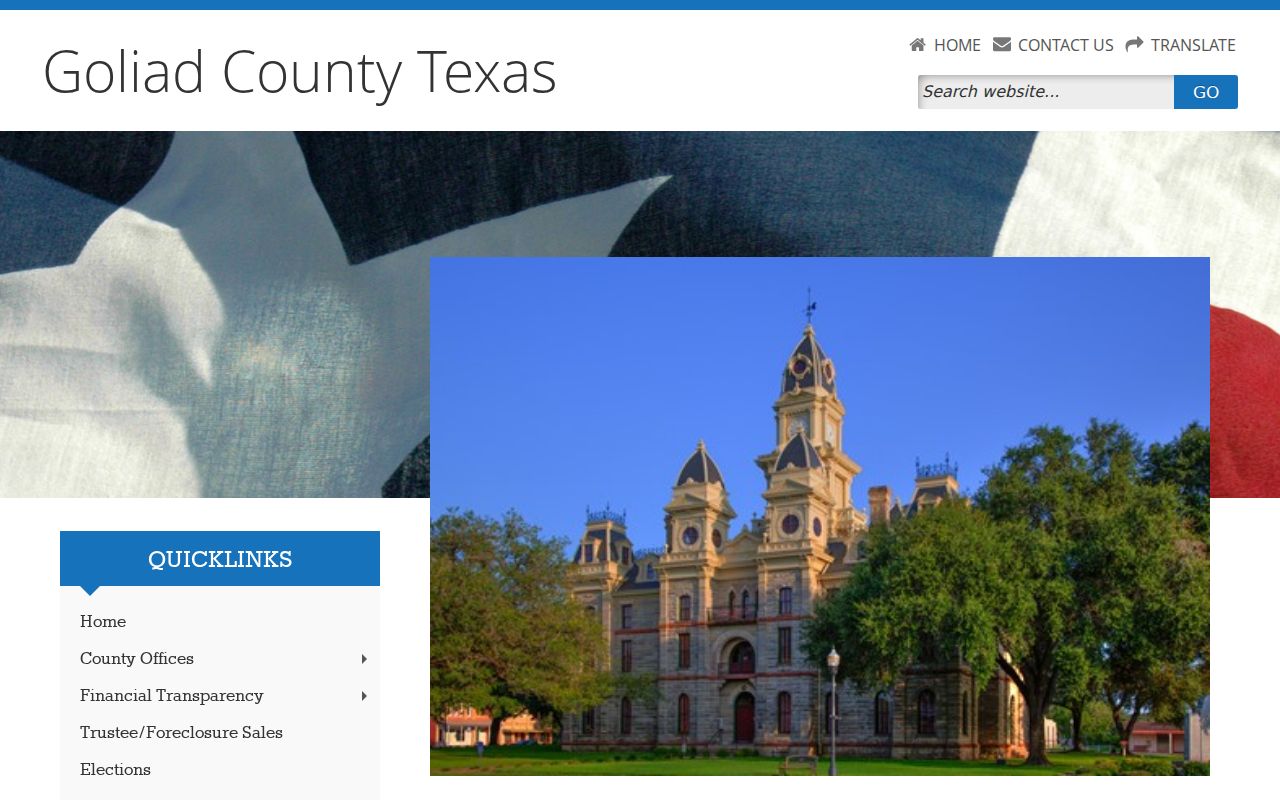
The directory connects the county’s small set of record custodians without implying that one office holds the whole criminal history.
Official Texas Background Checks
The Texas Department of Public Safety Crime Records Division maintains the central criminal-history repository. Its public name search principally returns convictions and deferred adjudications that agencies have reported to DPS. It is not the same as a person’s complete identity history, and it may omit a recent case, a non-reportable event, or restricted material. DPS sells search credits, but the research found no stable 2026 price to quote. Check the portal at the time of a transaction.
For a review of one’s own more complete Texas record, follow DPS Personal Review procedures and use fingerprints captured through FAST, the Fingerprint Applicant Services of Texas program administered through IdentoGO by IDEMIA. Certain official licensing or authorized volunteer checks also use a service code issued for that purpose. Goliad County has no enrollment site confirmed in the official sources, so travel may be needed.
Goliad County Fingerprint Record Review
Name searches can join the wrong person when names and birth details are similar. Fingerprints link the request to the subject’s biometrics and are the stronger route for personal review. Start at the FAST enrollment entry, follow the DPS Personal Review instructions, and use the correct service code. Do not invent or borrow a code because it controls the purpose and routing of the submission.
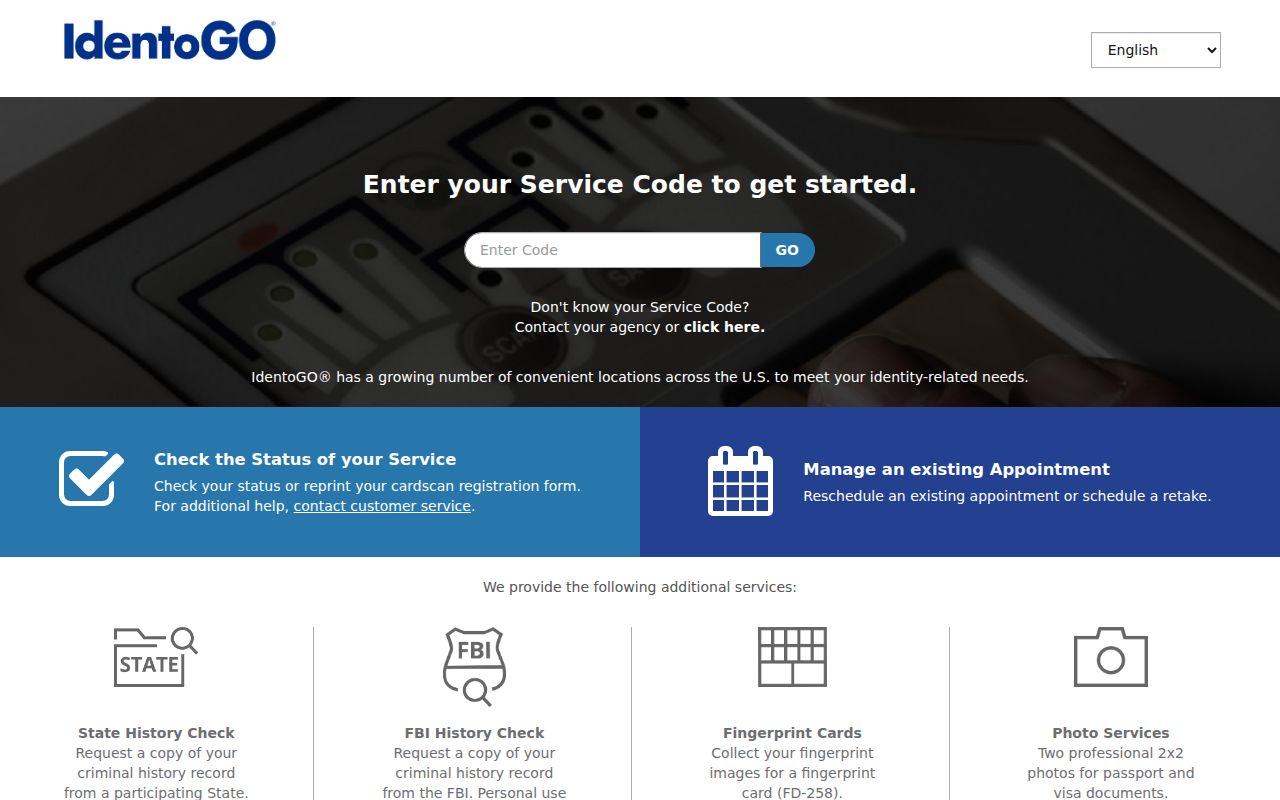
The FAST screen is an appointment gateway, not a public search for another person. A federal self-review is separate. The FBI electronic Identity History Summary portal accepts subject requests using fingerprints and the federal process.
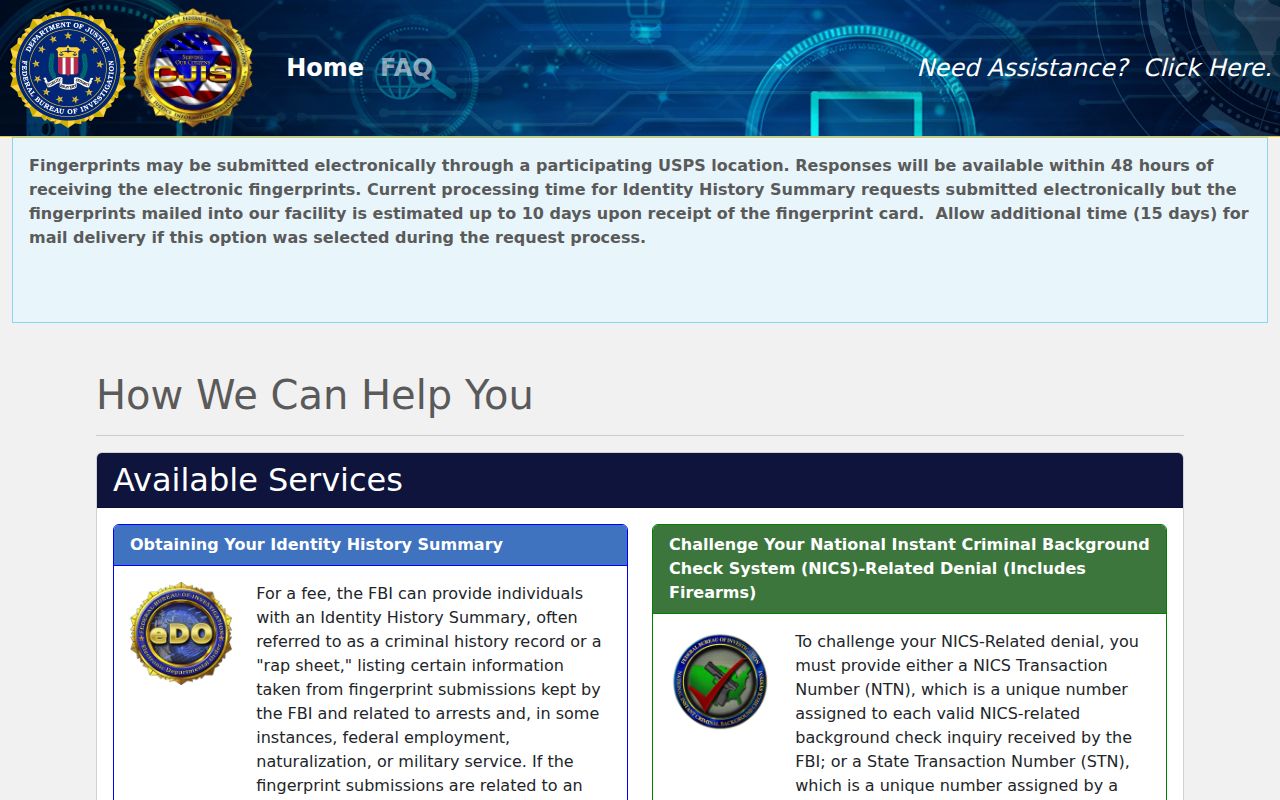
The FBI result covers federal identity-history data and should not be mistaken for the Goliad clerk’s case file or the county jail’s live custody record.
Types of Criminal Records
Each record type answers a different question. Goliad County court files show what prosecutors filed and how a judge resolved the case. Arrest reports state what an officer alleged. Booking records document intake and release. DPS history is a state compilation, while a registry profile is a deliberately published public-safety record. Warrants also require care because an arrest warrant, a bench capias, and a search warrant have different sources and access rules.
- Arrest and booking records come from the arresting agency and Goliad County Sheriff/Jail.
- Criminal court files come from the combined clerk or the lower court that heard the matter.
- State criminal history comes from DPS and reflects qualifying data reported into its system.
- Warrant records may sit with Sheriff/Jail, the clerk, Municipal Court, or a justice court.
- Supervision and registry records come from the sentencing court, CSCD, TDCJ, parole authorities, or DPS.
Start with the record that answers the question, then use the other sources to confirm timing and outcome. A Goliad County arrest report cannot prove a conviction, and a court judgment does not replace the jail’s intake and release record.
Goliad County Jail Booking Records
Goliad County does not publish an official web roster or sheriff app. For current county custody, call Sheriff/Jail at 361-645-1262, inquire at 700 E. End St., or submit a written request for the booking sheet. VINELink can provide custody notifications, but its status may lag and it is not a rap sheet. After a transfer to state custody, use the TDCJ Online Inmate Search instead. Federal custody belongs in the Bureau of Prisons system.
A useful booking request identifies the name, date, arresting agency, and known booking or incident number. Ask for releasable booking and release timestamps, charge and bond entries, and the booking sheet. Medical intake, private identifiers, juvenile data, victim information, and active-investigation material may be withheld. A telephone answer can change quickly, so record the time of the call and seek a written record when proof matters.
For the full custody and request chain, consult the Goliad County arrest history resource.
What a Goliad County Criminal Record Shows
A criminal record should be read field by field. Identity data helps distinguish people, but the case number and court connect the entry to its source. A charge is an allegation. The disposition describes the result, and the signed judgment or dismissal confirms it. Custody and supervision fields answer where the person is held or supervised, not whether every allegation led to guilt.
| Name & Identifiers | Legal name, aliases, birth data as public, case number, booking number, and state identifiers where released. |
|---|---|
| Arrest / Booking Data | Arresting agency, arrest and intake times, alleged charge, bond, release, and facility status. |
| Charges & Statutes | Filed offense language, Texas statute, offense class or degree, and later amendments. |
| Disposition | Pending, dismissed, acquitted, convicted, or deferred-adjudication result supported by a signed order. |
| Sentence | Confinement, fine, court costs, credit, community-supervision term, and stated conditions. |
| Custody / Supervision | County jail, TDCJ, bond release, CSCD supervision, parole, or completed status when reported. |
Read dates and identifiers together. The arrest date, booking date, filing date, and disposition date mark distinct steps, while a case number, booking number, and DPS identifier point to different systems.
Reading Goliad County Case Outcomes
“Filed,” “pending,” and “disposed” are status terms, not interchangeable outcomes. Filed means the clerk accepted a charging document. Pending means the case has not reached a final result. Disposed means the court entered an outcome, but the outcome might be dismissal, acquittal, conviction, or deferred adjudication. Deferred adjudication is not an ordinary conviction judgment, yet it usually is not an expunction either. Texas DPS may publish reportable deferred adjudications.
- Disposition
- The court’s recorded result for a charge or case.
- Deferred adjudication
- A plea-based outcome in which the court defers a finding of guilt while conditions are served.
- Expunction
- A Chapter 55A remedy that can require eligible records to be destroyed or returned.
- Nondisclosure
- A Chapter 411 order that limits public dissemination but does not erase every government record.
Ask the Goliad County and District Clerk for the register of actions plus the signed final instrument. A portal shorthand label should not override the order in the official file.
Public Access Laws
Texas law favors access to government information, but it also protects defined categories. The Texas Public Information Act governs requests to county offices. Court records are controlled through court access rules and the clerk’s file. Criminal-history dissemination rules limit what DPS and other criminal-justice agencies may release. Juvenile material, victim data, medical details, driver-license information, active law-enforcement material, sealed records, and expunged data can be withheld or removed.
Key Texas laws:
Government Code Chapter 552 gives the public a request process while preserving statutory exceptions.
Government Code Chapter 411 governs criminal-history dissemination and orders of nondisclosure.
Code of Criminal Procedure Chapter 55A sets Texas expunction eligibility and procedure.
Code of Criminal Procedure Chapter 62 governs sex-offender registration and the public registry.
Goliad County Sheriff Record Requests
The Goliad County Sheriff does not advertise a separate online records portal, public form, records email, or fixed report fee. Sheriff Roy Boyd’s office and jail use the shared address at 700 E. End St., Goliad, TX 77963, phone 361-645-1262, and fax 361-645-2230. A written Texas Public Information Act request may be delivered in person, mailed, or faxed. Ask for an electronic copy and an itemized estimate before chargeable work begins.
Name the incident date and place, involved agency, report or booking number, and exact records sought. Government Code Section 552.221 calls for prompt production. The often-cited ten-business-day period usually concerns an agency seeking an attorney-general decision to withhold information, not a promise that every request will be complete within ten days. The official sheriff page should be checked before a visit because no walk-in hours were published.
The county’s adopted FY2026 budget places the records function inside an integrated Sheriff/Jail operation. It funds a records superintendent along with dispatchers, deputies, jailers, prisoner food, medical care, extradition, radio, K-9, vehicle, and jail expenses. The department total exceeds $4.17 million. That local structure explains why callers use one main operational number for report and custody questions rather than separate bureaus. It does not mean every file is public or ready at once. Staff still must find the record, apply Texas confidentiality rules, and prepare releasable parts.
The Sheriff/Jail page confirms the office’s public contact and custody role. That office can provide its own report or booking record, but it cannot certify a district-court judgment.
Sealed, Expunged & Restricted
A dismissal does not by itself erase a Goliad County arrest or booking. Texas expunction under Chapter 55A is available only when the statutory facts and timing requirements are met. An order of nondisclosure under Government Code Chapter 411 is a different remedy: it restricts public release of qualifying history but leaves access for agencies authorized by law. Deferred adjudication often points toward nondisclosure rather than expunction, though eligibility depends on the case.
Juvenile files and some registration matters may be nonpublic. Victim identifiers, medical facts, Social Security numbers, and restricted law-enforcement material can also disappear from a public view without the whole case being sealed. If a known case is absent, ask the clerk whether the correct court and date range were searched. Staff may explain procedure but cannot decide eligibility or give legal advice.
Goliad County Criminal Record History
Modern Goliad County case custody centers on the 1894 courthouse at 127 N. Courthouse Square. The Texas Historical Commission describes the Second Empire building as the county’s fourth courthouse since 1836. It cost $67,888.95 and reused material from the 1870 courthouse. The building served as a hospital after the 1902 cyclone, lost its tower in a 1942 hurricane, and regained major historic features through a restoration completed in June 2004.
The combined County and District Clerk page provides public-search access, calendars, local rules, and office information.
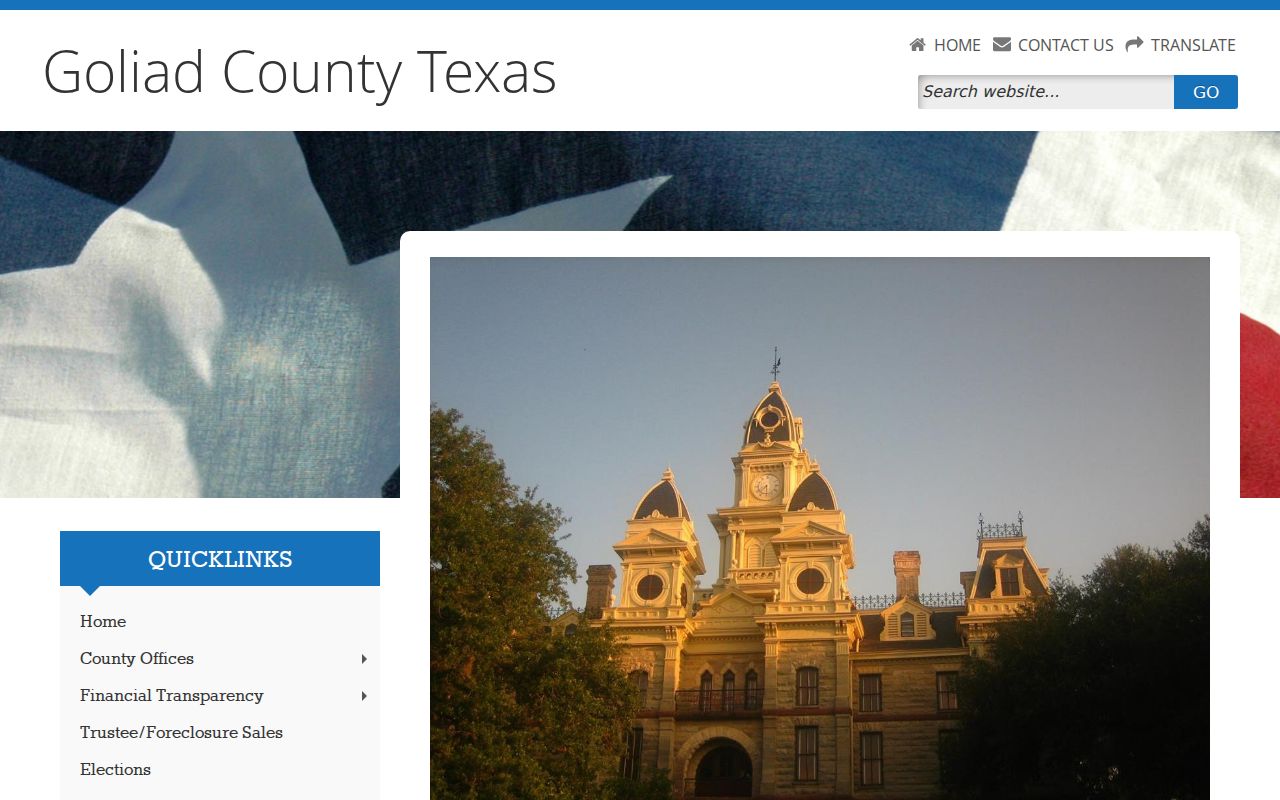
The clerk announces that, effective June 1, 2026, weekday hours are 7:00 a.m. to 5:30 p.m., with a noon closure and a 5:00 p.m. cutoff for money transactions. Confirm the schedule before travel. The office also posts unusual local orders on electronic devices, recording, and artificial intelligence that visitors should review.
Criminal Records by City in Goliad County
Goliad is the county’s only incorporated city, so the city layer is not padded with unincorporated communities. City police reports begin with the City of Goliad, fine-only cases stay with Municipal Court, and custodial bookings move to the county jail. Felonies and Class A or B misdemeanors then route to the combined county and district clerk. No official city defendant-name search or dedicated police-record form was found.
Goliad Criminal History
Municipal Court and city police routes, with county booking and court handoffs.
Goliad County Warrants and Supervision
No public countywide warrant search was located. Check Sheriff/Jail for county and district warrant information, the combined clerk for process tied to a filed case, Municipal Court for city warrants and capias pro fine, and the two justice courts for their matters. The separate Precinct 1 and Precinct 2 pages show why fine-only and magistrate records cannot be assumed to sit in the district clerk’s search.
Give staff a full name, date of birth when lawfully available, and a possible case number. Do not treat silence from one level as a countywide clearance. Arrest warrants, bench process, search warrants, and fugitive warrants have different disclosure and execution rules. Contact the issuing court for case and bond instructions, and seek legal advice when surrender or liberty is at stake.
The official Justice Court Precinct 1 page is the source for that court’s local channel.
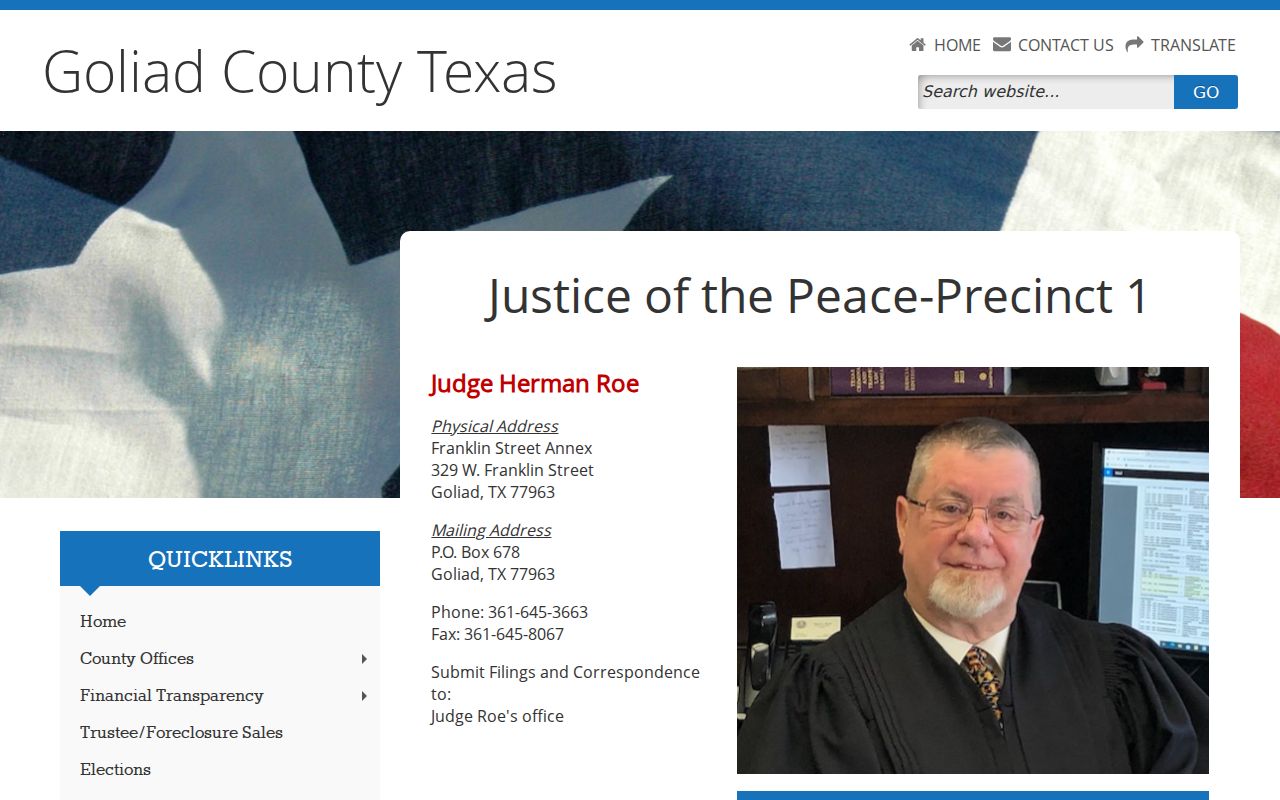
Precinct 1 maintains its own limited-jurisdiction record route rather than merging its files into one countywide warrant portal.
The official Justice Court Precinct 2 page supplies the matching source for the other precinct.
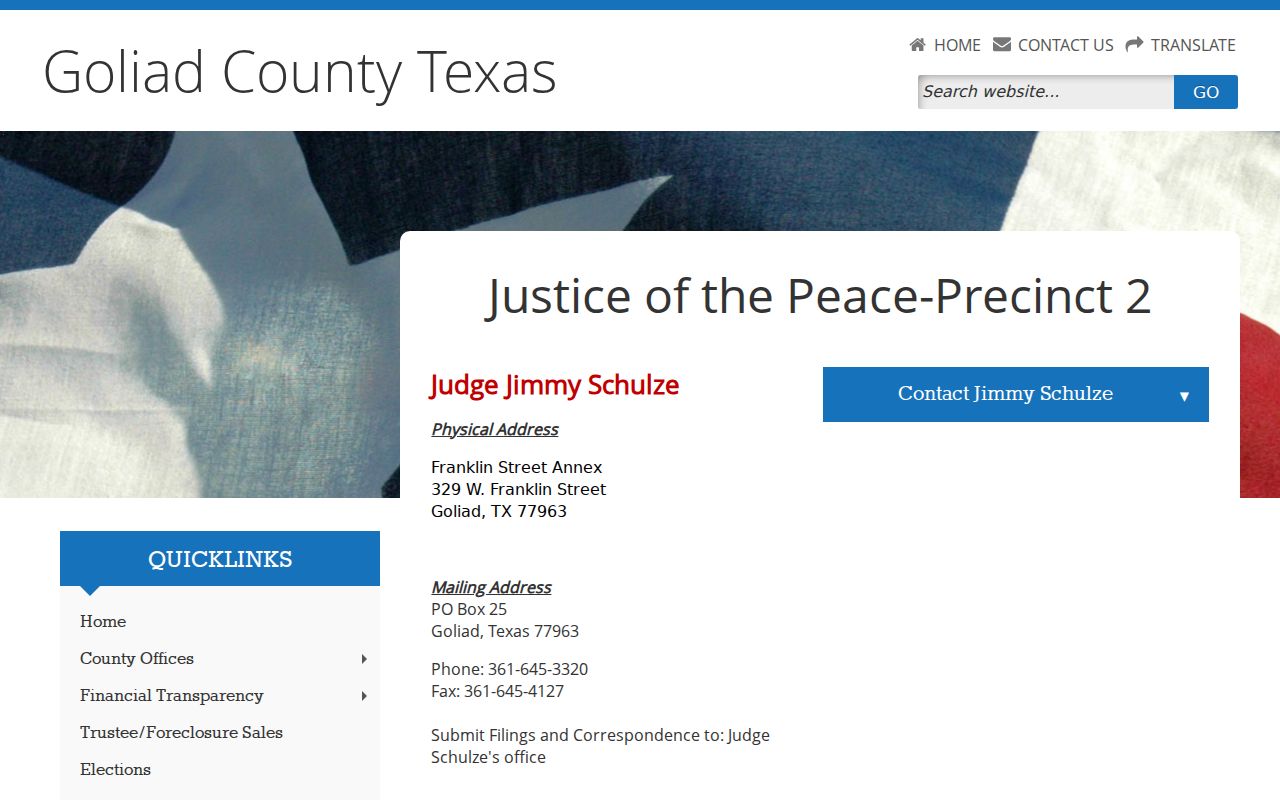
Precinct 2 likewise keeps its own limited matters, so both justice-court channels may need to be checked.
For supervision, the sentencing court and multicounty Community Supervision and Corrections Department are the probation sources. Parole decisions come from the Texas Board of Pardons and Paroles, while TDCJ’s Parole Division supervises releasees. The TDCJ district parole directory assigns Goliad County to the Victoria District Parole Office.
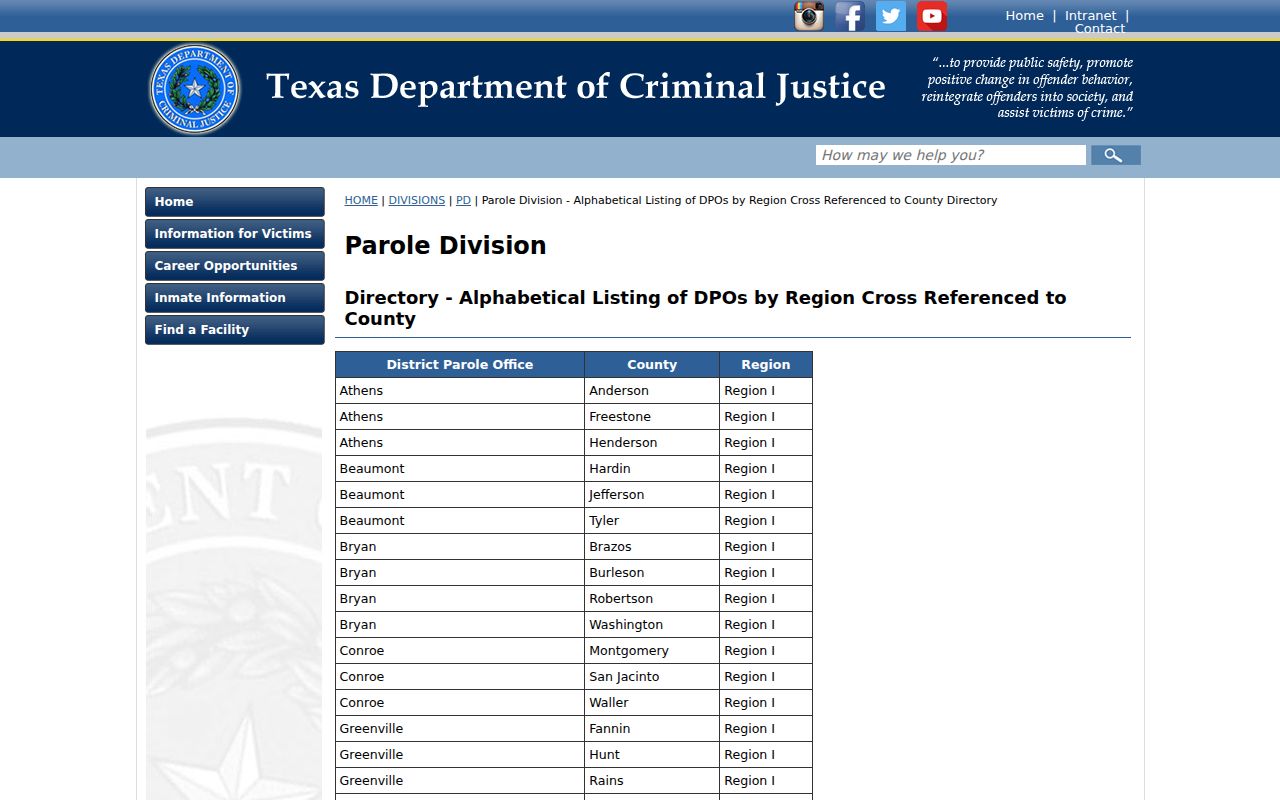
That directory answers where state parole supervision is based. It is not a public county probation roster or a substitute for the sentencing court’s order.